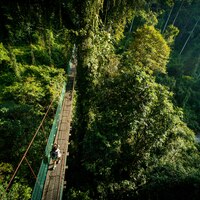
<p><strong>Redemption in the Rain Forest</strong></p><p class="p1">How does a nation overcome the gut-wrenching stigma of a genocide, now two decades past, and proclaim to the world that it is a safe and surprising place to visit? For <a href="http://travel.nationalgeographic.com/travel/countries/rwanda-guide/">Rwanda</a>, one strategy is to highlight a tract of unspoiled mountain rain forest rife with chimpanzees and a dozen other primates plus hundreds of species of birds—namely, Nyungwe National Park, in the southwestern corner of the country.</p><p class="p2">Nyungwe, which became a national park in 2005, exemplifies the farsightedness of a government that is channeling aid money toward preserving the best of Rwanda’s natural beauty, while bringing in tourist dollars that benefit surrounding communities. An example is the USAID-funded Nyungwe Nziza (Beautiful Nyungwe) project, which recently built a canopy walkway above a forested canyon—a thrilling perspective on the park and its residents.</p><p class="p2">Chimps are the star attraction in Nyungwe, though they’re not as readily watchable as the famed “in the mist” mountain gorillas farther north in Virunga National Park. Far easier to view are colobus monkeys. The world’s largest community of them lives in Nyungwe. The park hasn’t yet gained renown among birders, but it will. Almost 300 species abide here, including showboats like the oversize, clown-headed Ruwenzori turaco.</p><p class="p2">“Nyungwe stands out among Africa’s intact montane rain forests for its size and diversity,” says conservationist Bill Weber, who with his wife, Amy, pioneered the gorilla tourism project in Virunga. “It’s a place where people can spend several days and really get to know a rain forest, having different experiences each day.” Visitors can hike trails to peaks and waterfalls, and meet locals in Banda Village near the park entrance. Should one ask residents whether they are Tutsi or Hutu, the answer will almost certainly be “We are Rwandan.” <em>—Robert Earle Howells</em></p><p><strong> Travel Tips </strong></p><p><strong> When to Go:</strong> The drier months (July-October) are best for gorilla trekking, hiking, and tea plantation tours. For birding, visit December-March.</p><p><strong>How to Get Around:</strong> International flights arrive at Kigali International Airport, about 140 miles northeast of Nyungwe National Park. Rental cars are available but not recommended. The most convenient option is to book a custom or small group tour (including airport transfers, lodging, meals, activities, and park entrance fees) with a responsible tourism operator, such as <a href="http://www.rwandaecotours.com/inside-nyungwe-6-days-in-the-forest-with-profound-beauty.html" target="_blank">Rwanda Eco-Tours</a>, founded and operated by native Rwandans.</p><p><strong>Where to Stay:</strong> Serene and luxurious <a href="http://www.nyungweforestlodge.com" target="_blank">Nyungwe Forest Lodge</a> is the ideal home base for exploring the park. It's surrounded on three sides by tea plantation, and on the fourth by rain forest. Opened in 2011, 12-room <a href="http://nyungwehotel.com/v1" target="_blank">Nyungwe Top View Hill Hotel</a> lives up to its name. Step out onto your private balcony or sit on the restaurant’s outdoor terrace for mist-shrouded views of the national park and Lake Kivu.</p><p><strong> Where to Eat or Drink:</strong> <a href="http://nyungwepark.com/plan-a-visit/activities/eco-tourism" target="_blank"> Kitabi Cultural Village</a>, located at the Kitabi entrance to the national park, offers guided tours (with samples) where guests can learn about banana beer brewing, traditional milk preservation, millet grinding, and picking and processing tea leaves.</p><p><strong> What to Buy:</strong> Shop for original indigenous crafts, such as baskets, place mats, bracelets, and wood carvings, at the <a href="http://nyungwepark.com/wp-content/uploads/2012/11/Kitabi-Womens-cooperative.pdf" target="_blank">Kitabi Women’s Handicraft Cooperative</a>. Crafts are handmade using locally sourced materials, and purchases support the cooperative’s efforts to create a path out of poverty for local women.</p><p><strong> Cultural Tip:</strong> Environmental protection is a top priority throughout Rwanda. Plastic bags are banned and will be confiscated at border crossings. Litter laws are strictly enforced in Kigali, where footpaths protect green areas. Don’t walk on the grass.</p><p><strong> What to Read or Watch Before You Go:</strong> The 1988 movie <em><a href="http://www.amazon.com/Gorillas-Mist-Sigourney-Weaver/dp/0783233523/ref=sr_1_1?s=movies-tv&ie=UTF8&qid=1381017239&sr=1-1&keywords=gorillas+in+the+mist" target="_blank">Gorillas in the Mist</a></em>, the biopic of slain primatologist Dian Fossey, was filmed on location in Rwanda and promoted global awareness of the endangered Rwandan gorillas.</p><p><strong> Helpful Links:</strong> <a href="http://www.rwandatourism.com" target="_blank"> Rwanda Tourism</a> and the <a href="http://nyungwepark.com" target="_blank">Nyungwe Nziza (Beautiful Nyungwe) Project</a></p><p><strong> Fun Fact:</strong> Nyungwe National Park’s black-and-white colobus monkeys live high in the trees, rarely touching the ground. Their name is derived from the Greek word for “mutilated” since the monkeys typically have no thumbs. This adaptation makes it easy to scramble across branches on all fours.</p><p><strong> Insider Tip From Robert Earle Howells:</strong> At <a href="http://www.nyungweforestlodge.com" target="_blank">Nyungwe Forest Lodge</a> listen closely and you can hear a distant waterfall.</p>
Nyungwe Forest National Park, Rwanda
Redemption in the Rain Forest
How does a nation overcome the gut-wrenching stigma of a genocide, now two decades past, and proclaim to the world that it is a safe and surprising place to visit? For Rwanda, one strategy is to highlight a tract of unspoiled mountain rai...
- Travel
- Best Of
Best Trips 2014
National Geographic Traveler presents the New Year's must-see places. From Argentina to Oz, the final lineup reflects what’s authentic, culturally rich, sustainably minded—and, of course, superlative in the world of travel today.