List of Ancient Egyptian Pharaohs
Pharaoh is the king of Ancient Egypt. He is closely linked to the gods, so much so that he is considered the incarnation of Horo on Earth.

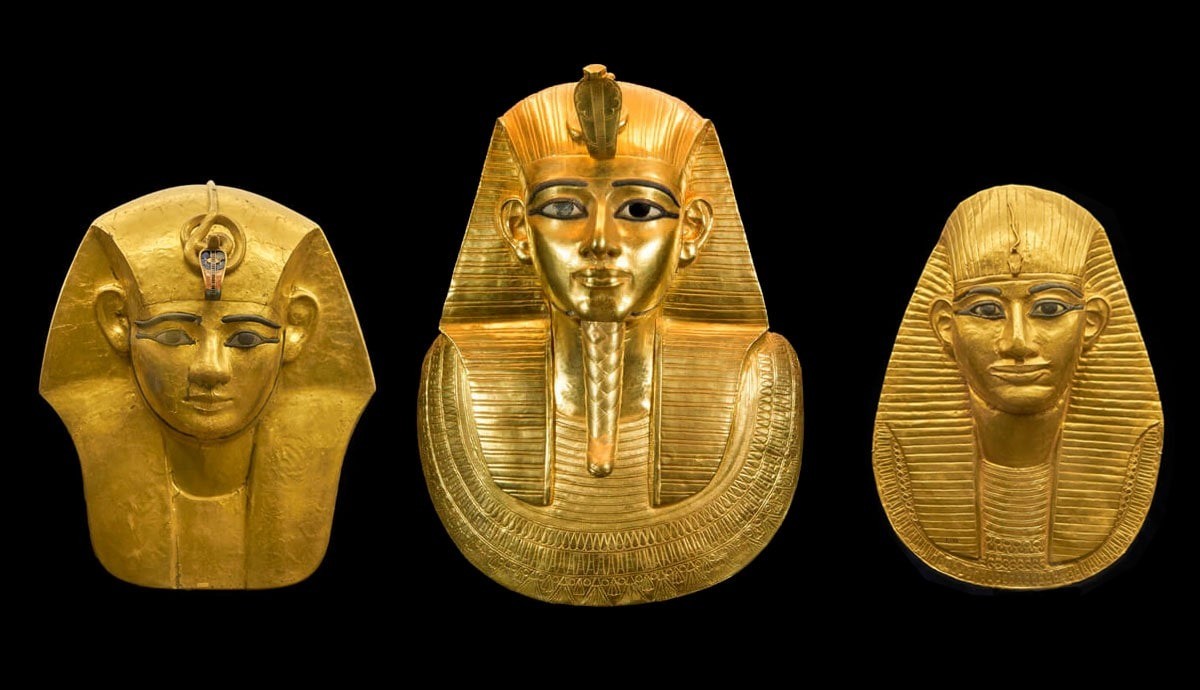

Pharaoh's kingship would remain unchanged for over 3500 years without ever being interrupted even during foreign invasions, which took advantage of this religious significance to seize power, until the advent of Christianity. The religious figure was never even criticized, while there are some negative judgments concerning the pharaohs, particularly those of the Late Epoch, but also illustrious figures such as Cheops and Pepi II. All Egyptian society thus has the pharaoh as its reference point. History is divided into dynasties, and art is adapted to the pharaoh's tastes. The various social strata are also linked to his politics: people work for him and receive their livelihood goods from him.
At the time of coronation, the pharaoh invests himself with five titles:
- The name of Horo, which identifies the king as the earthly incarnation of the god Horo. The falcon, the animal with which Horo is represented, along with the lion and bull, are the animals with which the pharaoh most often identifies. Since Horo is the son of Osiris, beginning in the Fifth Dynasty the king sees the meaning of this titling expanded: after death the pharaoh becomes Osiris and so does his figure of Horo.
- Nebti, meaning "the two ladies." This term is used to refer to the two patron deities of Upper and Lower Egypt who are Nekhbet (vulture) and Uto (cobra), respectively. It is not uncommon for the pharaoh to personify two female and opposing goddesses in his figure. For the Ancient Egyptians, only by uniting dualities can the whole be achieved. Thus in the person of the king are the eternal rival brothers Horo and Seth and the two halves of Egypt, Upper and Lower Egypt. This name was first adopted by Semerkhet (2nd Dynasty) and probably represents the ruler's career before the coronation.
- the "golden name" or "the name of the Golden Horo" as used in more ancient times. This title indicates the hawkish nature of the pharaoh, but also the material of which the gods and their depictions are made. Pharaoh was thus the earthly manifestation of the divine creatures.
- Nesut-biti, meaning "king of Upper and Lower Egypt," recalls the beginning of Egypt's history. Nesut, represented by the hieroglyphic reed, means "Lord of the North" while Biti, in hieroglyphic a bee, is the "Lord of the South." The first pharaoh to add this name to the royal titling was Den (1st Dynasty). From the Middle Kingdom onward, the name of the solar god Ra is always enclosed in this title. The hieroglyphic writing is enclosed by the so-called cartouche, an oval intended to protect the pharaoh's name from evil.
- Son of Ra. This was the name given at the ruler's birth identifying him as a member of the royal family. His name is likened to many deities, but only in the official titling is he called "the son of Ra." In the various appellations given to the king, the different expectations of each era are recognized. Thus the various "He who makes truth live and destroys falsehood" or "the Nile of Egypt who floods the country with his perfection" indicate what the people expected from that pharaoh and do not represent anything about his personality. There are still other ways by which Pharaoh is named such as "Lord of the two lands" or "Lord of the crowns" and many others.
Every pharaoh from the moment of coronation presents himself as the one who can restore order (Maat). Thus he will have the task of defeating evil to return to a renewed perfection. It is for this reason that some pharaohs who did not undertake any war campaigns were equally portrayed in military actions.
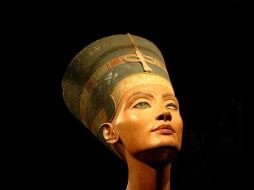

The way in which the pharaoh was depicted shows several affinities with the gods. Indeed, in depictions Egyptians were always drawn clean-shaven, while the gods were drawn with a ceremonial beard curved at its end. The rulers, for their part, wore a straight false beard that changed to a curved one only after death, that is, when the king became Osiris. It should be noted that only the god Ptah was portrayed with the straight beard typical of the still-living king.
As for the clothes worn by the pharaoh, one must separate the various historical periods since each period had its own characteristics. In the Old Kingdom the king used to wear a very short skirt called shendjut. In the New Kingdom, the rulers preferred to wear a long, plain skirt with a sleeveless blouse. On the occasion of the Sed festival, the pharaoh also wears a short, rather tight-fitting robe.
However, what unquestionably distinguishes the person of the pharaoh are the crowns. In ancient times, when the division into Upper and Lower Egypt still existed, there were two different crowns. The first (hedjet) was white, made of soft material and with a very distinctive shape. The second (deshret) was red with a flat cap decorated with a curl.
The union of the two crowns gives rise to the crown (pshent) that identifies the pharaoh as the ruler of united Egypt.
During the New Kingdom, rulers used to prefer a blue crown shaped like a helmet and adorned with metal plaques. This type of crown is exclusive to the king, while the others were also worn by the gods. In the Late Epoch, feathered crowns of various kinds decorated with horns and snake-gods were introduced. Very often, instead of the crown, the pharaoh wore a headdress also decorated with the rectangular-shaped snake-ureus and made of cloth.
The snake-ureus, according to Egyptian belief, with the fiery breath of its venom keeps enemy forces away from the pharaoh. This symbol is what distinguishes the pharaoh from other people even when he wears only a wig (in Egypt the wig was worn indiscriminately by men and women of all social classes).
From the earliest times, at the height of the belt the ruler wore knotted a taurine tail that shows the connection to the bull. At priestly functions such a tail is replaced by a panther skin.
Royal footwear is often sandals as evidenced by the many findings including the fabled tomb of Tutankhamun.
Among the most important insignia of power distinguishing the pharaoh are undoubtedly the ancient curved pastoral staff and the scourge that is probably a fly swatter.
Pharaoh's day was carefully planned. He was surrounded by a magical aura: if anyone approached him he had to do so in proskynesis, that is, prostrate to kiss the earth. The priest Rawer, who lived during the Fifth Dynasty under King Neferirkara, recounts in his tomb at Giza that he was accidentally bumped by the king's mace during a ceremony. Pharaoh had to declare the accidental nature of the act and, consequently, the impunity of the priest whose life was thus spared.
The person who represents the pharaoh completely steps into the role. In this way art is influenced to represent the pharaoh not as he is in reality, but as an ideal figure precisely to accentuate his uniqueness. All pharaohs, such as Ramesses II who reigned for over 66 years, were always depicted in their full youthful vigor even in spite of their advanced age. Even during the end of the 12th Dynasty and during the reign of Akhenaten, the figure of the pharaoh, who no longer followed classical canons, was the result of a different conception of kingship.
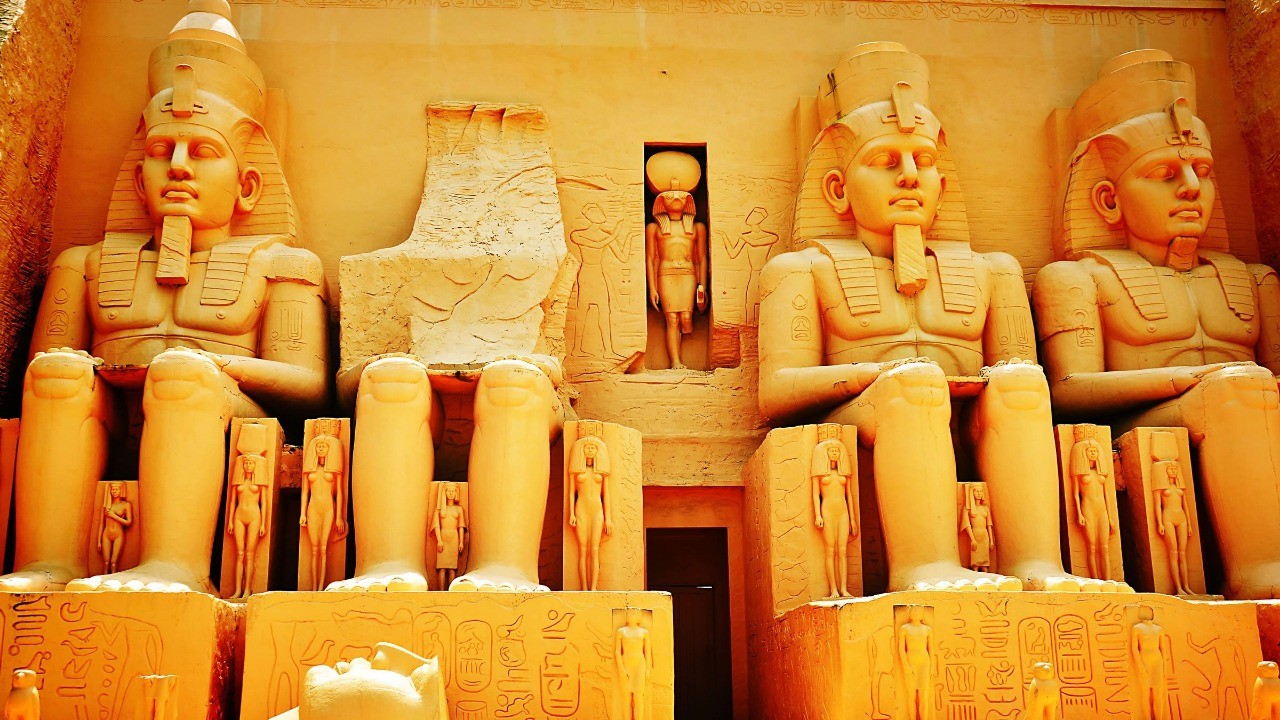

Much information regarding the pharaoh's physical appearance is derived from the examination of the royal mummies. Thus it can be stated with certainty that Thutmosi III was 1.62 m tall and had delicate features, Amenophis III tended toward obesity and, in old age, was afflicted with toothache, Siptah had to overcome a childhood paralysis that left him with obvious traces, and Ramesses V died young from smallpox.
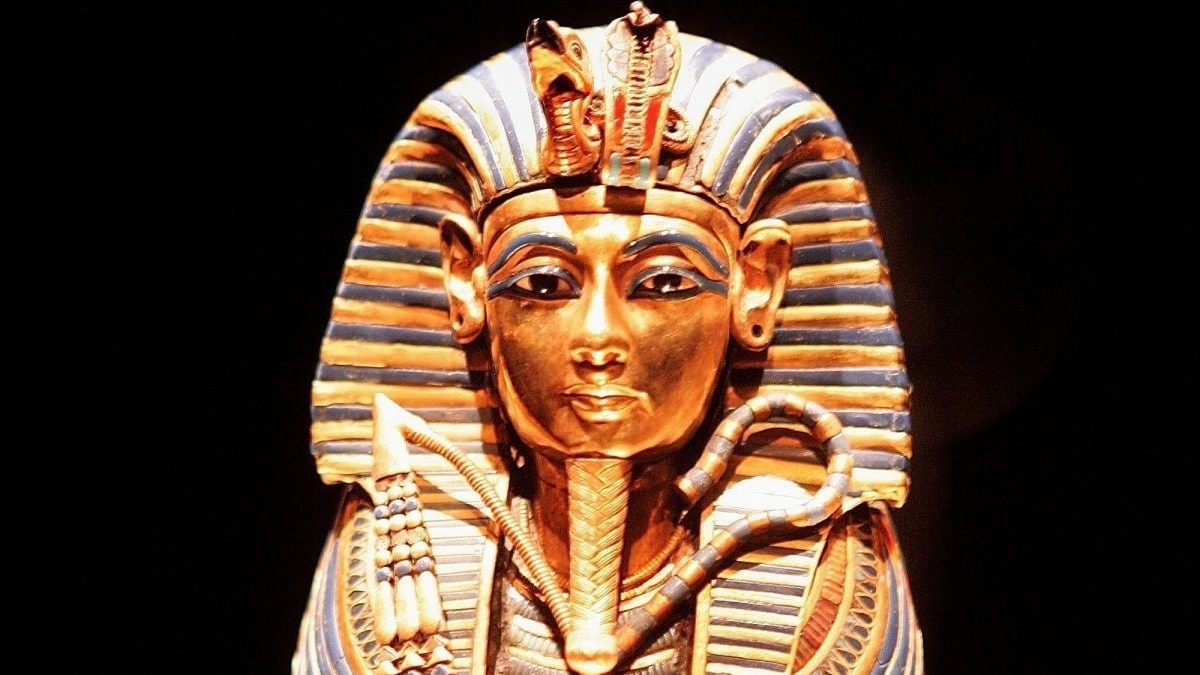

The royal bride played a key role in the succession to the throne: succession to the throne depended on her and her descendants, and in the absence of a reigning pharaoh, she had the opportunity to reign when the heir was a minor. In the history of the dynasties there were instances when a woman rose to rule permanently: Meritneith (1st Dynasty), Sebeknefrura (late 12th Dynasty), Hatshepsut (18th Dynasty) and Tausret (late 19th Dynasty).
Meritneith reigned after the death of Uagi, whose wife was probably, pending the coming of age of Den, her son. She had two royal tombs, stelae and statues built. She did not, however, assume the name of Horo and did not date her period of regency so, to scholars, she is not to be considered a full-fledged pharaoh.
Sobeknefrura ascended the throne after the death of her brother Amenemhat IV, who probably had no male heirs. There are many accounts concerning the woman-pharaoh such as a bust preserved in the Louvre that depicts her in women's clothing but with the pharaoh's insignia. She calls herself the "female Horo" thus taking on all the characteristics of the male pharaoh.
Hatshepsut is the most famous female ruler of Egypt. During her reigning years she gradually lost the female canons by making herself portrayed as a man. Her reign lasted more than 20 years and was marked by co-regency with Thutmosi III.
Tausret, who was already queen and thus enjoyed great privileges, reigned after the death of her son Siptah.
From the 8th to 6th centuries BCE, the office of the "divine bride" was introduced. They reigned in place of the king and determined succession to the throne through adoption. They did not marry and assumed the title of brides of the god Amun. Although not actual kingship, they invested many of the pharaoh's prerogatives.
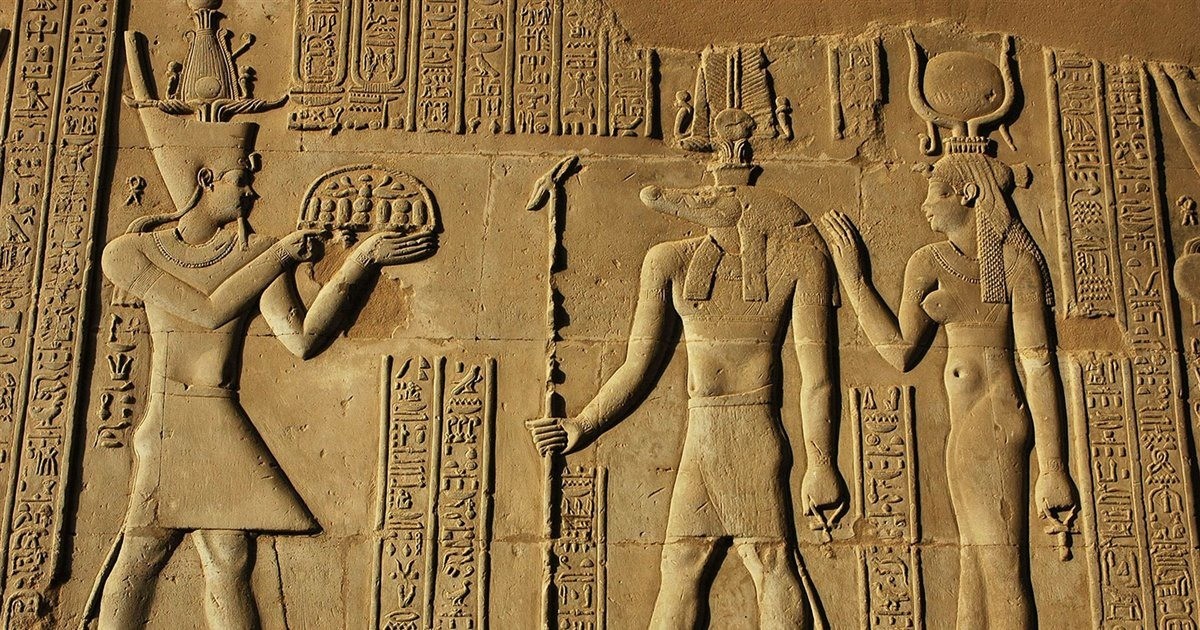

In the Old Kingdom, the role of vizier was also held by a son of the pharaoh, while other administrative positions were entrusted to members of the royal family.
In Ancient Egypt the designation of the heir was not predetermined so that all sons of the pharaoh were brought up the same way. Among them the pharaoh's heir was chosen, while the others became his advisors. The same procedure was applied for the succession of high officials. The education of the heirs was given by the palace school where the appointment of the educator was of great importance. It was the pharaoh himself who decided on the basis of his trust to whom he would entrust the education of his children. The basis of education was knowledge of writing, which enabled the learning of ancient texts. Sports were also practiced, which included activities such as archery, swimming and general military training. Very proud of his own performance was Amenhotep II, the "sports king," who left very meticulous records of his achievements judged to be far superior to those of the soldiers in his army.
The figure of the pharaoh is characterized by a human and a divine aspect. He is a man who fulfills the function of a god; he is the intermediary between men and the gods. In official titling, the pharaoh is a god or is the son of a god, while among appellations the pharaoh is the image of a god or is loved or favored by the gods. The Westcar papyrus, from the Middle Kingdom, tells of the direct descent of the kings of the first 5 dynasties from the solar god Ra, while later, as in the Ramesside period, pharaoh is defined as the son of Seth, who has no sons, because of his warrior affinity with the same god. In the teaching for Merikara, all men are defined as the image of god. Thus in the 13th dynasty the definition "living image of Ra on earth" takes hold, Amenophis III is for Amon-Ra "my beloved son, begotten of my body, my image, whom I have elected on earth." Amenemhat III, in loyalist instructions is referred to as Sia, Ra, Hapi, Khnum, Montu, Bastet and Sekhmet to cover the different aspects of his role. Pharaohs also had themselves represented as animals such as the bull, lion and falcon to which others were added as time went on. Chephren was the first to create the myth of the king protected by the falcon (depiction of Horo), a myth that would last until the end of the Pharaonic era. Nectanebo I, in addition to sharing Chefren's idea, even called himself "the Falcon." Ramesses II often had himself portrayed with attributes of the falcon although, in this case, the pharaoh intended to refer to the solar god Ra-Harakhti. The god with whom the pharaoh is most often portrayed is definitely Ra. While in the first 3 dynasties he is sparsely documented, from the 4th dynasty onward Ra plays an increasingly important role.
Many pharaohs will take names derived from epithets of Ra and, next to their pyramids, will build a shrine dedicated to Ra himself. With the pyramid texts, Ra becomes the dominant god of the afterlife. Amenhotep III was the first to identify with Ra while he was still alive. Until now, only after death did the pharaoh, who transformed into Osiris, become a god, but, from this point on, the pharaoh will be worshipped as a god even while alive. Amenhotep III will have two temples built in Nubia, those of Soleb and Sadeinga, where it was possible to worship him and his wife, Queen Teje. Following in the same footsteps would be Tutankhamun (temple of Faras) and Ramesses II (several temples including Abu Simbel). The people truly believed that the pharaoh was a god. Wars were officially waged only for defensive reasons.
Beginning in the Middle Kingdom the king proclaimed himself ruler of all lands. In the New Kingdom Egypt expands its kingdom considerably, conquering regions such as Palestine, Syria, Lebanon, and much of what is now Sudan. The expansion of borders is to be compared to the expansion of pre-existing temples and buildings that was practiced in Egypt by almost all rulers. In fact, a pharaoh, who was in charge of bringing something new to the country, could also simply expand already existing buildings. A classic example of this conception is the temple at Karnak, which was "tweaked" by various pharaohs for more than 2,000 years. On the same level is the tradition of replacing the cartouches of predecessors with those of the incumbent ruler. By this system, too, the king brought novelty and thus progress. During the New Kingdom there was a continuous expansion and development of the tombs in the Valley of the Kings, which increased in halls, pillars, and innovations in the making of decorations and sarcophagi. Evolution came to a halt at the beginning of the 20th Dynasty. The tombs, in fact, reached such a size that it was impossible to design larger ones. Therefore, stratagems were resorted to, such as that of Ramesses IV, who had to give up some of the halls in order to take advantage of wider corridors so as to achieve a still appreciable result.
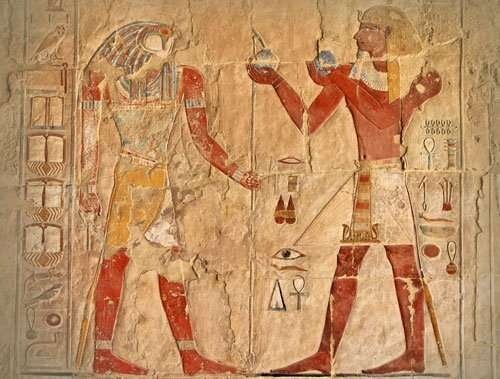

Pharaoh was never a judge, but punishments could not be carried out without his consent.
Pharaoh himself had the power to appoint the high priests, thus limiting the influence of the clergy and preventing hereditary renewal of office.
The figure of the pharaoh in Ancient Egyptian history always enjoyed great privileges but never turned his politics into oppression. Egypt is one of the longest-lived civilizations mankind has known, and its great fascination involved even foreign rulers who rose to rule during periods of crisis. None of them, in fact, attempted to transform the customs of this country, but, on the contrary espoused its traditions, thus making the people accept them more or less willingly. Well-known examples are those of Alexander the Great, the Ptolemies, and the Ethiopian rulers who had themselves depicted on temples intent on bringing gifts to the gods. All Egyptian history was conditioned by respect for the Maat of which the pharaoh was the guarantor.
Pharaoh had to act on earth as a creator god and overcome, through his own divine nature, the imperfection of man.
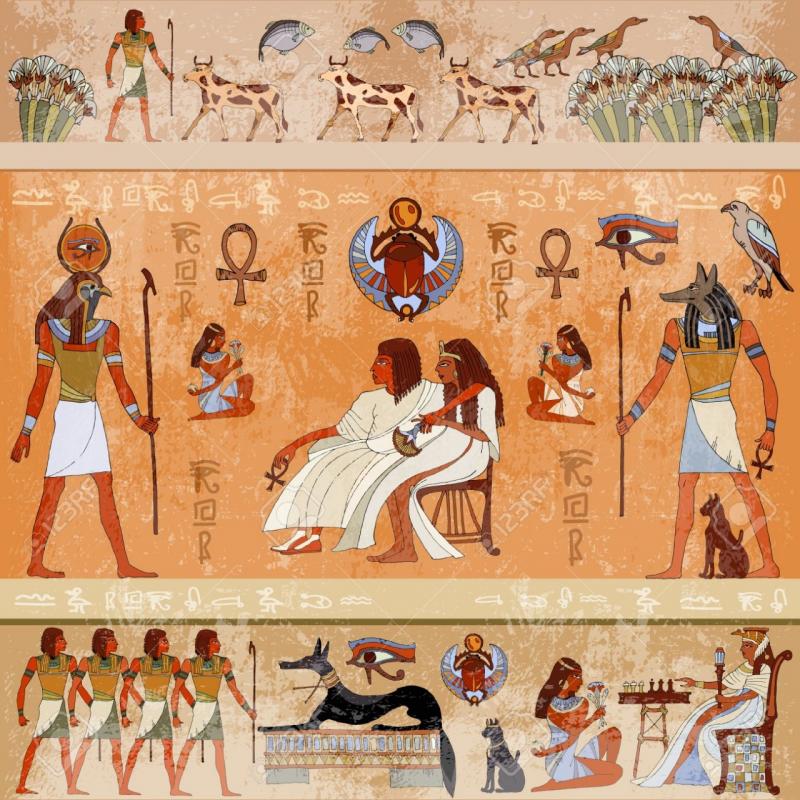

Pharaonic genealogy
Successors to the throne are highlighted in bold.
Legend: in the column "Important persons":
- (A) architect
- (C) chancellor
- (F) official
- (L) lieutenant
- (M) chief doctor
- (S) chief sculptor
- (V) vizier
| Pharaoh | Wives | Children | Important persons |
| Aha | Neithhotep | ||
| Djer | Merneith | Hemaka | |
| Uagi | Merneith | Den | |
| Semerkhet | Qaa | ||
| Khasekhemui | Nimaatapi | Zoser | |
| Zoser | Imhotep (A) | ||
| Huni | Meresankh | Snefru, Hetepheres I | Kaires (V) |
| Snefru | Hetepheres I | Cheope | Nefermaat (V), Kanefer (V), Kagemni (V) |
| Cheope | Meritites, Nefertkau, Henutsen | Hargedef, Hemiunu, Djedefhor, Baefra, Kauab, Khufukhaf, Minkaf, Dedefra, Chefren, Hetepheres II, Meresankh II, | Kanefer (V), Hemiunu (V), Kauab (V) |
| Dedefra | Khentetenka, Hetepheres II | Setka, Hornet, Baka, Neferhetepes | |
| Chefren | Meresankh II, Khamerernebti I | Micerino, Nebemakhet, Khamerernebti II, Rekhetre | Ankhhaf (V), Minkaf (V), Nefermaat (V) |
| Micerino | Khamerernebti II, Bunefer | Shepseskaf | |
| Shepseskaf | Khantkaus I | Sahura, Neferirkara | |
| Neferirkara | Khantkaus II | Niuserra, Neferefra | Ptahhotep, Ti (F), Uashptah (V) |
| Neferefra | Ti (F) | ||
| Isesi | Unas | Ptahhotep(V), Akhtihotep(V) | |
| Unas | Iput | ||
| Teti | Iput, Khuit, Seshet | Pepi I | |
| Pepi I | Ankhensenpepi | Giau(V) | |
| Merenra I | Ankhnesmerira | Pepi II | Giau(V) |
| Nebkaura Kheti II | Merikara | ||
| Ahhotep | Ahmose I | ||
| Amenemhat I | Sesostri I | ||
| Amenemhat II | Khnumit, Neferuptah, Ita | ||
| Sesostri II | Uret | Sathathoriumet | |
| Sesostri III | Sathathor, Mereret | ||
| Tao I | Tetisheri | Tao I | |
| Tao II | Ahhote | Kamose, Ahmose I | |
| Ahmose I | Ahmose Nefertari | Amenofi I | |
| Thutmosi I | Ahmose | Hatshepsut | |
| Thutmosi II | Iside, Aset | Thutmosi III, Hatshepsut | |
| Thutmosi III | Rekhmira (V) | ||
| Hatshepsut | Neferura | Senmut (A) | |
| Thutmosi IV | Mutemuia | Amenofi III | |
| Amenofi III | Teie, Satamon, Iside | Satamon, Henutemheb, Iside, Nebetah, Bakelalen, Thutmosi, Akhenaton | Amenhotep (A), Ptahmes (V) |
| Akhenaton | Nefertiti, Kiya | Tutankhamon, Meriaten, Ankhesenamon, Smenkhara | Penthu (M), Djehutymes (S), Hat (L) |
| Tutankhamon | Ankhesenamon | Ay (V) | |
| Ay | Tiy II | Nefertiti, Nefertari, Mutnedjemet | |
| Horemheb | Mutnedjemet | ||
| Seti I | Tuya | Ramesse II | |
| Ramesse II | Nefertari, Isitnofret, Meritamon, Nebettaui | Khamuaset, Merenptah, Amonhirkhepshef, Parahiruenemef, Merira, Meriatum, Meritamon, Nebettaui | |
| Merneptah | Isinofre | Seti II | |
| Seti II | Takhat II, Tausert | Ramesse-Siptah, Merenptah | Bay (V) |
| Ramesse III | Ramesse IV, Pentaur | ||
| Psammetico I | Nitocri | ||
| Aprie | Nespaqashuty |