


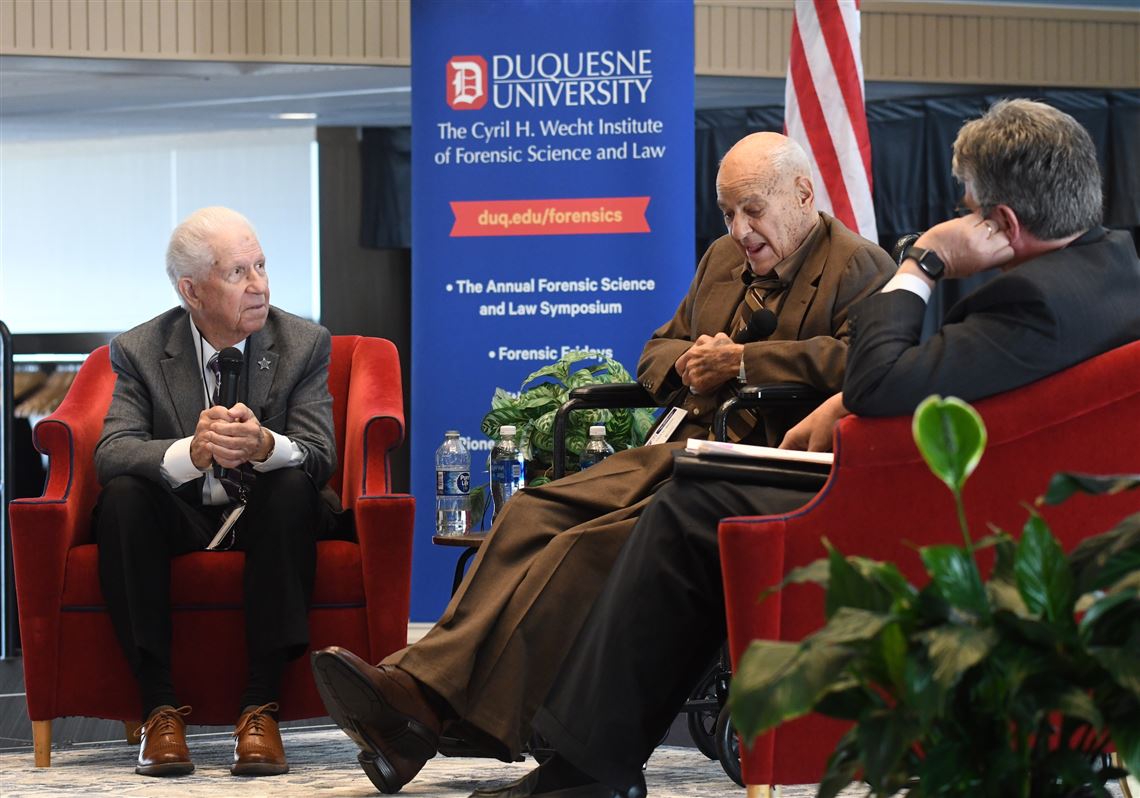

To this day, former U.S. Secret Service agent Paul Landis says he has no reservations about removing the “magic bullet” that was lodged in the back of John F. Kennedy’s limousine on the day he was assassinated — but the sight of the former president as he was gunned down has played on a loop in his head ever since.
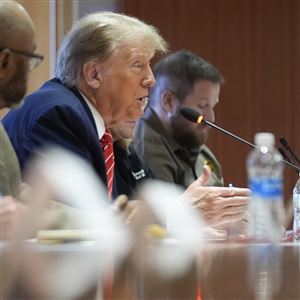
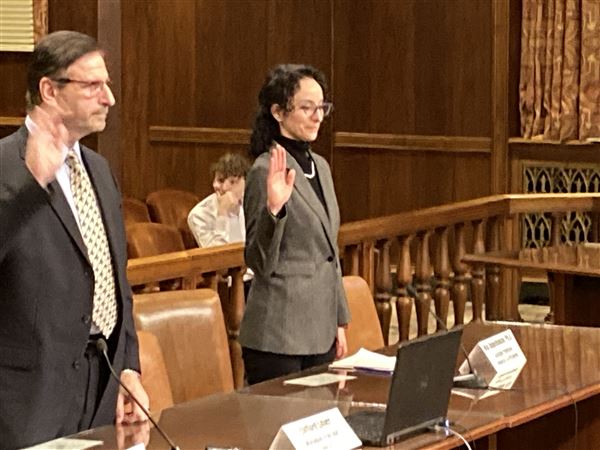
Mr. Landis, who released his memoir detailing his stint with the Secret Service titled “The Final Witness” last month, was featured as one of the keynote speakers at the 22nd Annual Wecht Symposium at Duquesne University commemorating the 60th anniversary of Kennedy’s assassination.
In the memoir, Mr. Landis, who had been in the car behind the vehicle Kennedy was shot in during a parade in Dallas on Nov. 22, 1963, recounted how he took the bullet from Kennedy’s limousine and later put it on then-Texas Governor John Connally’s stretcher out of fear that it would get picked up by a bystander or lost.
The bullet, which appears completely undamaged, went on to spawn the “magic-bullet theory” conspiracy which claimed that the bullet struck Kennedy in the back, exited through his throat, and struck Connally, who was seated in front of Kennedy and was also injured in the assassination.
“I did not feel guilty at all anytime after the assassination,” Mr. Landis said during the symposium on Thursday. “I felt I did the right thing.”
Mr. Landis was joined on stage by lawyer and author James Robenalt, president of Duquesne and former law professor Ken Gormley, and Dr. Cyril Wecht — a nationally recognized medical-legal consultant, author, and expert on many of the past half-century’s highest profile deaths — who said the revelations from Mr. Landis disproved the theory that a single bullet struck both Kennedy and Connally.
“It just pours more concrete over the gravesite over the single-bullet [theory],” Dr. Wecht said, adding that the bullet’s final resting place in the backseat has continued to stump him.
“I can’t tell you how many hours I consume as I go through the day and think through the night, trying to go to sleep, trying to reconstruct it,” Dr. Wecht said. “Nobody has accurately done that and this is a criticism of me as well as everyone else.”
And while the mechanics of the shooting itself have remained a mystery, Dr. Wecht discussed his long-held theory regarding who was behind the assassination, which he said he believes was a small group that included rogue elements of the CIA and the Italian mob.
“The motive would have been to stop Kennedy’s socio-political agenda, nationally and internationally” Dr Wecht said.
This year’s Wecht Symposium attracted a crowd of over 100 lawyers, doctors, researchers, scholars, and history buffs.
Other featured discussions included the legitimacy of a pair of brain exams following Kennedy’s autopsy, an acoustic analysis of the assassination and a review of a mysterious letter JFK assassin Lee Harvey Oswald wrote days before he himself was killed.
Also in attendance were a pair of attorneys, Lawrence Schnapf and William Simpich, who are suing the federal government in an attempt to obtain more records regarding the assassination.
The event also attracted the former chief financial officer of the Allegheny Health Network, Jeff Crudele, who traveled from South Florida to attend the symposium and now hosts the podcast “JFK - The Enduring Secret.”
“I think a lot of people from the outside who look at people who are still intensely interested in this may think its an obsession of some sort, but it's really a lot more than that,” Mr. Crudele said. “This country is only a small number of years away from its 250th anniversary and there’s only been one time, in all the history of this country, there’s been a transference of power that wasn’t through the prescribed democratic process.”
The symposium also came one week after Dr. Wecht donated a voluminous collection of his work to Duquesne University.
The collection includes Dr. Wecht’s case files into high-profile killings that include David Koresh and the Branch Davidians, JonBenet Ramsey, the Menendez brothers, Casey Anthony, Scott Peterson, and Chandra Levy.
“Anyone who follows famous criminal investigations or the debate on the JFK assassination will know the name Cyril Wecht,” University Archivist Tom White said in a statement. “We are excited to have the collection of such a prominent and experienced figure in the world of forensic pathology. This collection will be valuable to students, researchers, criminologists, historians and anyone trying to understand the assassinations in the 1960s.”
First Published November 19, 2023, 2:30am