Opinion
The military-industrial complex cashing-in on the Ukraine war
-
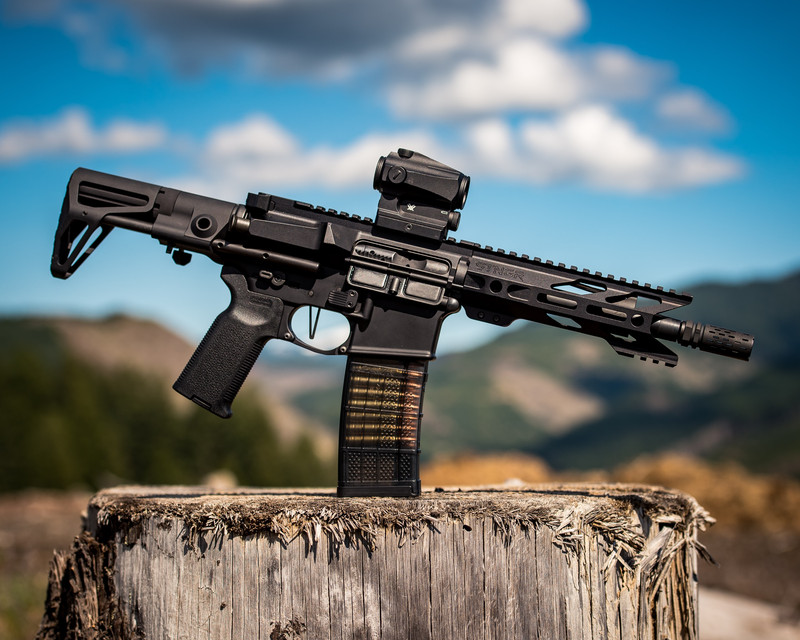
A war on the EU's doorstep has justified a shifting of the goalposts with regard to arms companies accessing ever-expanding sources of public and private finance (Photo: STNGR industries)

Since Russia's full-scale invasion of Ukraine in February 2022 media attention has regularly focused on the military assistance provided by states to bolster Ukraine's war effort with Nato members delivering almost $40bn [€38bn] in military aid to date.
Despite this unprecedented outpouring of support, nine months later the war drags on and there has been little public scrutiny of those who are profiting from the misery — the arms industry.
Join EUobserver today
Become an expert on Europe
Get instant access to all articles — and 20 years of archives. 14-day free trial.
Choose your plan
... or subscribe as a group
Don't miss out on
Our exclusive news stories and investigations. Influential. Investigative. Independent.

Why join?
Watch our founder Lisbeth Kirk explain the reasons in this 30-second video.
Already a member?
Nato members were already spending 17 times more than Russia on military expenditure before the war and Nato collectively enjoys a superior defence capacity and more sophisticated weaponry.
Despite this, since the invasion European leaders have pledged unprecedented increases to their military budget. By mid-May 2022, bloc members had announced almost €20bn in increases with the European Commission considering as a matter of urgency the "short-term need to replenish and expand defence stocks including to compensate for the military assistance to Ukraine".
Similarly, the EU earmarked half a billion euros for joint arms procurement and announced future increases to the European Defence Fund, which finances the research and development of arms.
Structural changes were taking place across the EU, not only to fast-track arms to Ukraine, but also to make large pools of public finance available to the highly lucrative arms industry.
From the outset arms manufacturers have eyed this war as a profitable business opportunity.
New research from Stop Wapenhandel and the Transnational Institute reveals that the arms industry has used the sentiment of fear to whitewash its image and position itself as an essential partner that can provide the necessary tools to ensure security.
The EU and its member states have been very receptive, having long viewed arms companies as expert allies and key partners, rather than commercial, profit driven entities.
In the days following the outbreak of war, an appeal was made by German arms lobby group BDSV for the EU to "recognise the defence industry as a positive contribution to social sustainability" under sustainable finance taxonomy (ESG).
In the months that followed, European banks and other investors that previously refrained from engaging arms companies shifted course, partly in response to pressure from governments, and began to look more favourably on ending their exclusion from investment opportunities.
On European Defence Innovation Day, European Defence Agency chief executive Jiří Šedivý said that 'the brutal Russian war of aggression in Ukraine vividly shows why we need to urgently strengthen European defence', while the European Commission's high representative for foreign affairs and security policy, Josep Borrell, added that "we either innovate [sic] or we risk becoming irrelevant in the field of security and defence".
Though this securitised framing was already ingrained in European policies long before the invasion, a war on the EU's doorstep has justified a shifting of the goalposts with regard to arms companies accessing ever-expanding sources of public and private finance.
20 percent of two percent
At the June 2022 Nato summit in Madrid an innovation fund was launched, which will invest €1bn of public money over the next 15 years in 'early-stage start-ups and other venture capital funds'. Nato policy already stipulates that members must strive to invest at least two-percent of GDP in their military budgets, of which at least 20 percent should go to arms purchases.
If this trend towards greater leniency continues, it is not inconceivable that arms companies including those involved in the development, production or maintenance of nuclear weaponry, may eventually be able to access funds earmarked for social sustainability projects.
If the war in Ukraine has taught us anything it is that militarism does not work. It did not deter Russia from invading Ukraine and engaging in a protracted war, and it will not diminish the terrifying prospect of nuclear warfare — only through nuclear disarmament can this threat be countered, not by militarising further.
Despite militarism being a fundamental part of the problem and not the solution, European political and financial institutions, and the arms industry alike, have embraced wholesale the notion of militarised security evoking a common language and deploying terms such as 'competition', 'innovation', or 'enterprise'.
Vast sums that could otherwise be invested in health, education, and other essential social services, or to offset the excessive warming of our planet and the rising cost of energy, are instead being diverted for investment in the research, development and procurement of arms in an already over-armed world.
This is no longer about responding to the war in Ukraine, this is about driving a new arms race.
If we take European leaders at their word that Europe must militarise further to counter the Russian threat, but considering how vastly over-armed EU member states already are, when will enough be enough? Building Europe's security on the profit based dreams of arms companies and their shareholders will only fuel future wars and exacerbate human suffering.
Author bio
Niamh Aine Ni Bhriain is programme coordinator and researcher at the Transnational Institute , the Amsterdam-based NGO founded in 1974 as the international programme of the Washington DC-based Institute for Policy Studies, advocating for justice, democracy, and sustainability.
Disclaimer
The views expressed in this opinion piece are the author's, not those of EUobserver.